
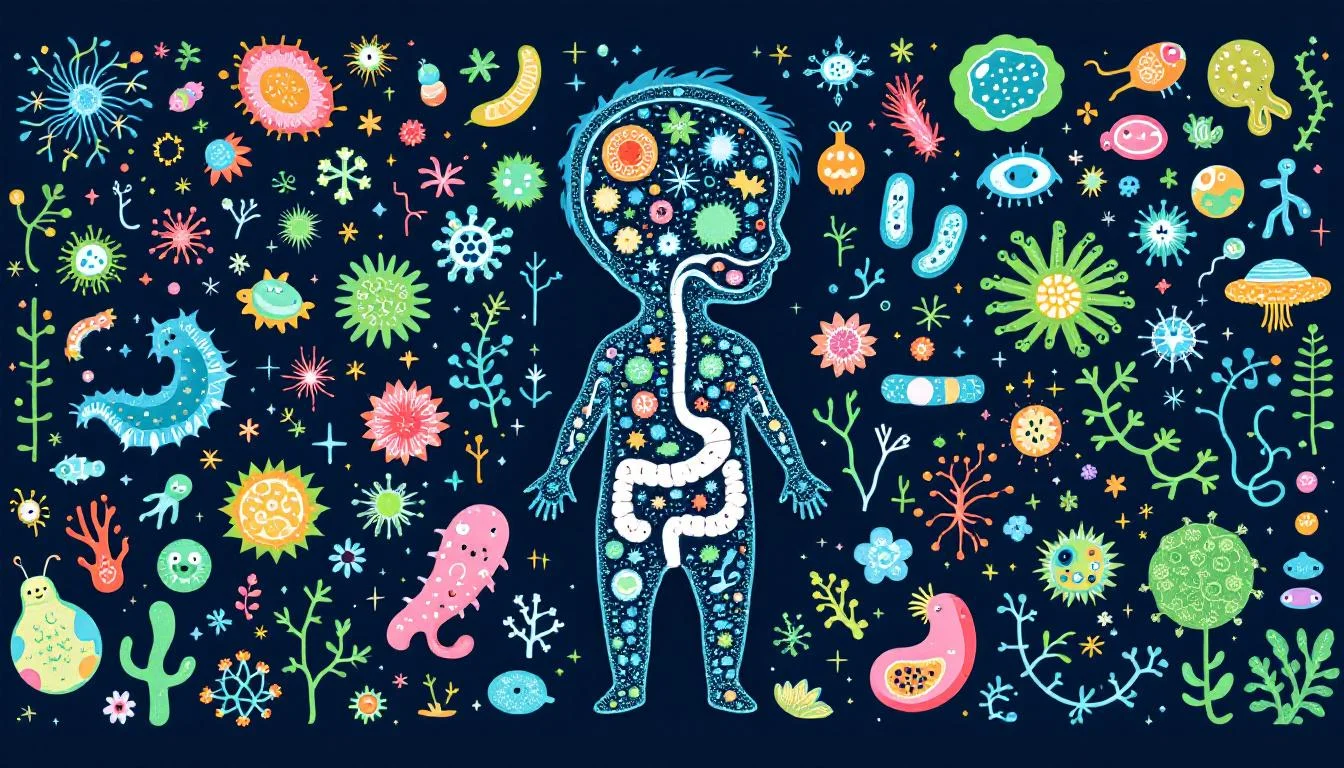
The infant and child gut microbiome — established in the first three years of life — is now recognized as a critical determinant of immune function, allergy risk, metabolic health, and potentially mental health across the lifespan. Early microbiome disruption has consequences that persist into adulthood.
What Does the Research Say?
The microbiome ‘window of opportunity’ closes around age 3, after which diversity and composition stabilize into adult patterns. A 2015 analysis of Finnish and Swedish children found microbial diversity at age 1 predicted atopic sensitization (allergy) development at age 5 — a higher-diversity microbiome was powerfully protective. Studies across multiple countries show C-section birth, formula feeding, antibiotic exposure in the first 2 years, and low dietary fiber all reduce microbiome diversity in ways that persist for years.
The gut-brain axis in children is particularly important: emerging research from the CHILD cohort study found specific gut microbiome patterns at 3–4 months predicted behavioral problems and anxiety symptoms at age 3. A 2021 RCT found probiotic supplementation in children with ADHD significantly improved behavioral scores and reduced gut permeability. Dietary fiber diversity — variety of plant foods — is the most modifiable determinant of child microbiome health, with each additional plant food variety per week associated with measurably greater microbiome diversity.
Key Findings
- Microbiome diversity at age 1 predicts allergy development at age 5 — highest diversity is most protective
- C-section birth, formula, antibiotics, and low-fiber diet all persistently reduce microbiome diversity
- Specific infant gut microbiome patterns at 3–4 months predict anxiety and behavioral problems at age 3
- Each additional variety of plant food per week is associated with measurably greater microbiome diversity
Practical Takeaway
The key modifiable lever: dietary fiber diversity. Aim for 30+ different plant food varieties per week — this includes every type of fruit, vegetable, grain, legume, nut, and seed. Introduce fermented foods (plain yogurt, kefir) from 6 months alongside complementary feeding. Minimize unnecessary antibiotics and add probiotic supplementation when antibiotics are unavoidable. Find child probiotics: children’s probiotics.